

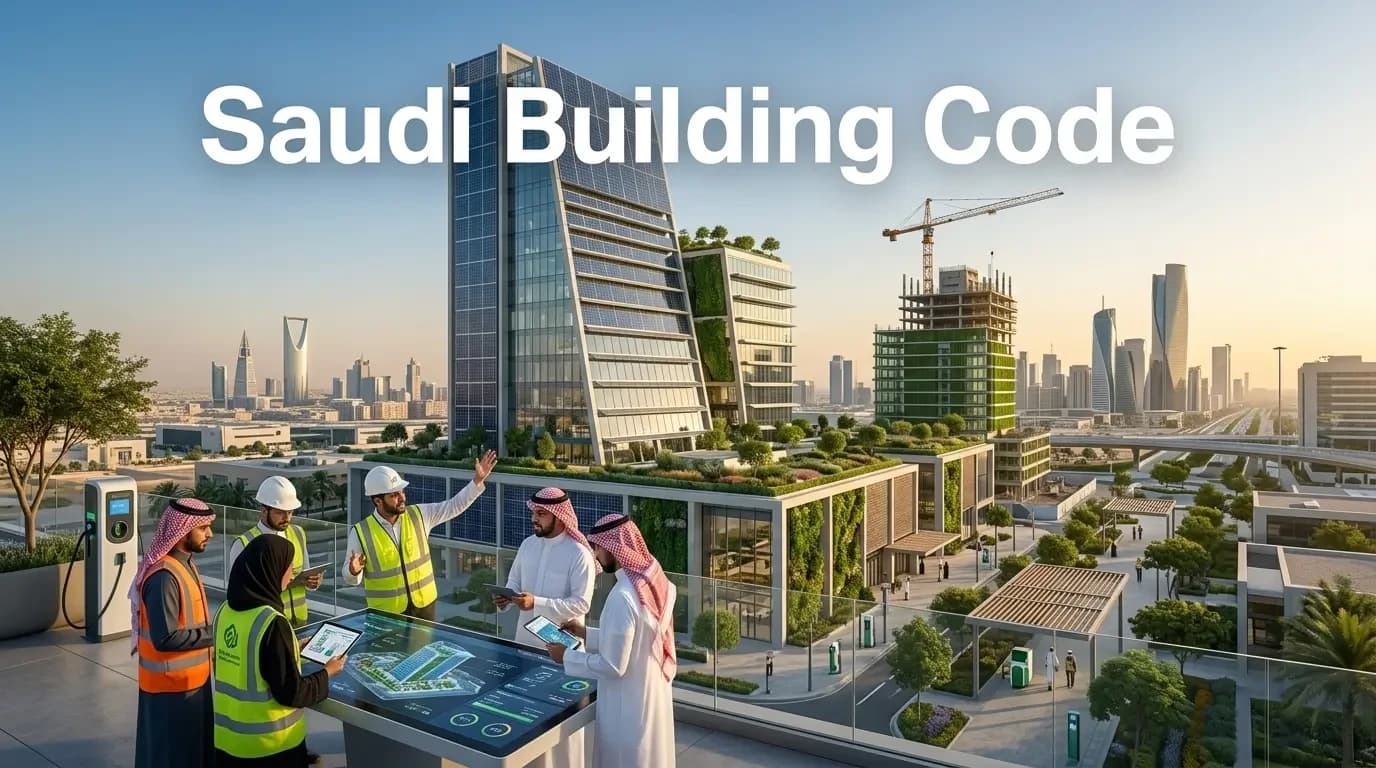
Sustainability has become one of the most influential concepts shaping the construction and building sector in Saudi Arabia, particularly with the country's rapid urban expansion and large-scale development projects. As a result, the Saudi Building Code has emerged as a key regulatory framework aimed at improving building quality and enhancing the efficient use of natural resources and energy.
The role of the Saudi Building Code extends beyond ensuring structural safety. It also includes a comprehensive set of requirements and standards that support environmental sustainability, reduce energy and water consumption, and improve the overall quality of life within buildings. Consequently, compliance with sustainable building standards has become an essential component of developing modern cities and achieving the goals of Saudi Vision 2030.
In this article, we explore the relationship between the Saudi Building Code and sustainability, the importance of green buildings in Saudi Arabia, and the role of modern building standards in improving energy efficiency.
What Is the Saudi Building Code?
The Saudi Building Code is a collection of technical regulations and standards that govern the design, construction, operation, and maintenance of buildings throughout the Kingdom of Saudi Arabia.
The code aims to achieve several key objectives, including:
Protecting lives and property.
Improving the quality of buildings and infrastructure.
Enhancing energy efficiency.
Promoting environmental sustainability.
Reducing resource waste.
Improving indoor air quality and environmental performance.
The code applies to residential, commercial, industrial, educational, and healthcare buildings, with specific requirements tailored to each building type.
The Importance of the Saudi Building Code and Sustainability in Urban Development
The Saudi Building Code and sustainability principles play a significant role in advancing the construction sector by establishing standards that improve building quality and operational efficiency. They also help balance urban development with the conservation of natural resources, making them essential foundations for modern projects across the Kingdom.
The Importance of Sustainability in Saudi Arabia’s Construction Sector
Saudi Arabia's construction industry continues to evolve, requiring more efficient and sustainable solutions to address environmental and economic challenges.
Reducing Natural Resource Consumption
Sustainable buildings help reduce the consumption of water, energy, and raw materials, preserving resources for future generations.
Lowering Operating Costs
Buildings designed according to sustainability standards typically require less energy for cooling and lighting, resulting in lower utility and maintenance costs.
Improving Quality of Life
Sustainable buildings create healthier and more comfortable indoor environments through better ventilation, natural lighting, and improved air quality.
Supporting Saudi Vision 2030
Saudi Arabia is committed to sustainable development and reducing the environmental impact of urban projects, aligning closely with the objectives of the Saudi Building Code.
Green Buildings in Saudi Arabia
Green buildings have become one of the most important trends in Saudi Arabia’s construction sector. These buildings rely on designs and technologies that reduce environmental impact while improving resource efficiency.
What Are Green Buildings?
Green buildings are structures designed, constructed, and operated in ways that minimize the use of energy, water, and raw materials while providing a healthy and comfortable environment for occupants.
They focus on achieving a balance between environmental, economic, and social performance.
Benefits of Green Buildings in Saudi Arabia
Green buildings offer numerous advantages, including:
Reduced electricity consumption.
Lower carbon emissions.
Improved water efficiency.
Extended building lifespan.
Increased property value.
Enhanced occupant comfort.
Key Elements of Green Building Design
Green buildings incorporate several essential components, including:
Effective Thermal Insulation
Thermal insulation helps reduce heat transfer into the building, minimizing the demand on air conditioning systems.
Natural Lighting
Carefully designed windows and openings maximize daylight, reducing reliance on artificial lighting during the day.
Sustainable Building Materials
These materials have a lower environmental impact, are recyclable, or offer long-term durability.
Water Management Systems
Modern water-saving technologies and wastewater reuse systems contribute to more efficient water consumption.
Energy Efficiency in Buildings
Improving energy efficiency is one of the primary objectives of the Saudi Building Code, especially given the climate conditions that require extensive use of air conditioning throughout the year.
Why Is Energy Efficiency Important?
Energy-efficient buildings help:
Reduce electricity bills.
Lower pressure on power grids.
Decrease environmental emissions.
Improve overall building performance.
The Role of Thermal Insulation in Energy Savings
Thermal insulation is one of the most effective ways to reduce energy consumption.
The better the insulation performance of a building, the less reliance there is on cooling systems, leading to significant reductions in energy use and operating costs.
High-Performance Windows and Glazing
Windows play an important role in controlling heat gain within buildings.
Using double-glazed or low-emissivity glass improves thermal performance and contributes to lower energy consumption.
High-Efficiency Air Conditioning Systems
Air conditioning systems account for a significant portion of electricity usage in buildings. Therefore, modern building standards encourage the use of highly efficient HVAC systems.
Energy-Efficient Lighting Systems
LED lighting and smart control systems can significantly reduce electricity consumption compared to conventional lighting solutions.
How Does the Saudi Building Code Support Energy Efficiency?
The Saudi Building Code includes a range of energy-efficiency requirements, such as:
Applying thermal insulation standards.
Improving the performance of windows and façades.
Reducing air leakage.
Using high-efficiency mechanical systems.
Enhancing lighting efficiency.
Monitoring and managing energy consumption.
These requirements are designed to improve building performance while reducing environmental impact.
Benefits of Complying with the Saudi Building Code
Compliance with the code provides several advantages for property owners and investors.
Increased Property Value
Buildings that meet modern standards generally have higher market value than traditional buildings.
Reduced Operating Costs
Improved energy and water efficiency help lower long-term operational expenses.
Enhanced Building Quality
Following technical standards improves overall building performance and extends its lifespan.
Greater Environmental Sustainability
Compliance contributes to lower resource consumption and reduces the environmental footprint of construction projects.
The Future of Sustainable Construction in Saudi Arabia
Saudi Arabia’s construction sector is undergoing a major transformation toward sustainability and energy efficiency, supported by large national projects and government initiatives aimed at creating a more sustainable urban environment.
The importance of green buildings is expected to grow significantly in the coming years, alongside the adoption of advanced technologies and smart building systems that improve environmental and economic performance.
in the end The Saudi Building Code represents a major step toward creating a more sustainable and efficient built environment in Saudi Arabia. Through the implementation of modern building standards, it is possible to improve building quality, reduce energy and water consumption, and enhance occupant comfort.
Green buildings play a critical role in achieving environmental sustainability goals and supporting Saudi Vision 2030, while energy-efficient buildings help reduce operating costs and preserve natural resources. As a result, compliance with the Saudi Building Code and sustainability principles has become a long-term investment that delivers economic and environmental benefits for society as a whole.
To learn more about Saudi Building Code requirements and sustainable building solutions, and discover how we can help you achieve higher efficiency, compliance, and long-term value for your project.
Frequently Asked Questions About the Saudi Building Code and Sustainability
What Is the Saudi Building Code?
The Saudi Building Code is a set of technical regulations and standards that govern the design, construction, operation, and maintenance of buildings to ensure safety, quality, and energy efficiency.
What Are Green Buildings?
Green buildings are structures designed to minimize the consumption of energy, water, and natural resources while providing a healthy and comfortable environment for occupants.
How Does the Saudi Building Code Support Sustainability?
The code promotes sustainability through thermal insulation requirements, energy efficiency standards, water conservation measures, and improved indoor environmental quality.
Why Is Energy Efficiency Important in Buildings?
Energy efficiency helps reduce electricity costs, lower environmental emissions, and improve the overall performance of buildings.
Is Thermal Insulation Mandatory Under the Saudi Building Code?
The code includes specific thermal insulation requirements aimed at improving energy efficiency and reducing electricity consumption.
What Are the Benefits of Green Buildings for Owners and Investors?
Green buildings offer lower operating costs, higher property values, improved occupant comfort, and better long-term investment returns.
How Do High-Performance Windows Contribute to Energy Savings?
High-performance windows reduce heat transfer into buildings, decreasing the need for air conditioning and improving energy efficiency.
Does the Saudi Building Code Apply Only to New Buildings?
The code primarily applies to new developments, but its standards can also be used when upgrading or renovating existing buildings.
How Does Saudi Vision 2030 Relate to Sustainable Construction?
Saudi Vision 2030 supports the development of sustainable cities and projects by encouraging efficient resource use and reducing environmental impact.
Why Has Sustainability Become Essential in the Construction Industry?
Sustainability helps preserve natural resources, reduce operating costs, improve quality of life, and support long-term economic and environmental development.